
Plant Stories: Fergal Donnelly (Garden Designer, Consultant and Head Gardener at LQ BID)
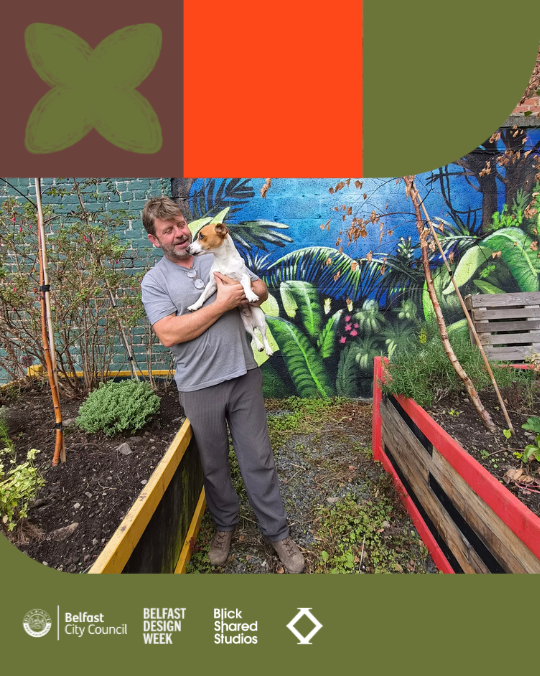
My name is Fergal, I’m a gardener, and I do work for the Linen Quarter BID here in Belfast, and the Cathedral Quarter as well. We are just trying to do our bit to bring a bit of colour into the city and a bit of enjoyment for people. I think it’s nice for people to walk through the city centre in the mornings on the way to work and see things that are - you know - nice and help alleviate the boredom of the day!
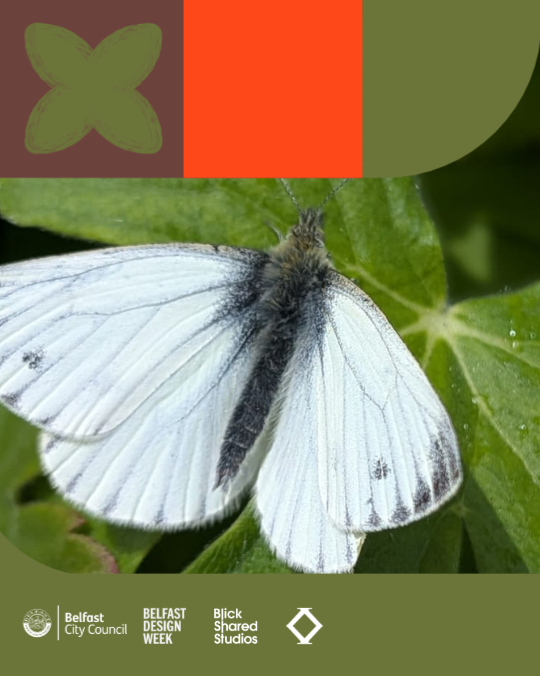
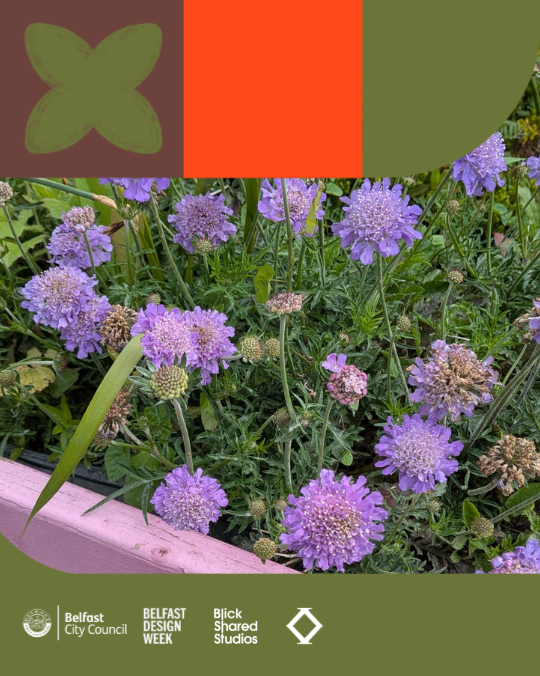
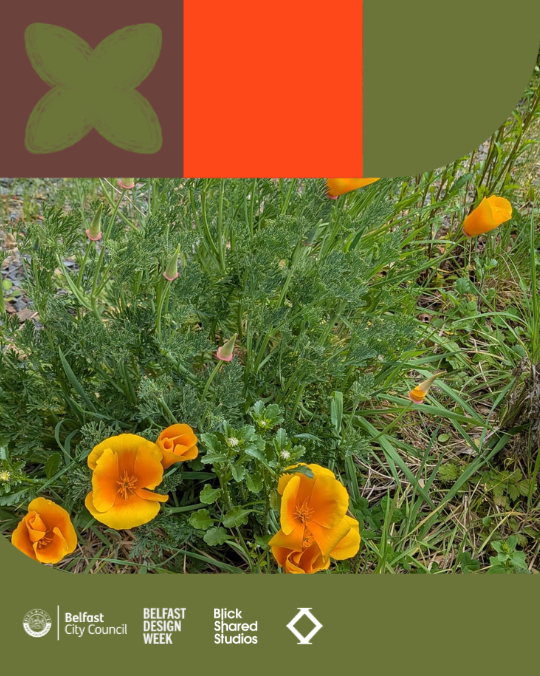
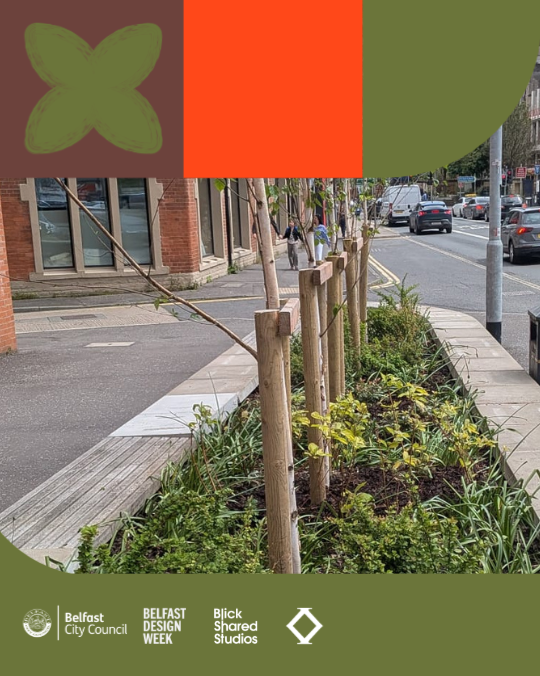
How do you typically create wildflower and plant patches in the Linen Quarter, for example at Bankmore Square?
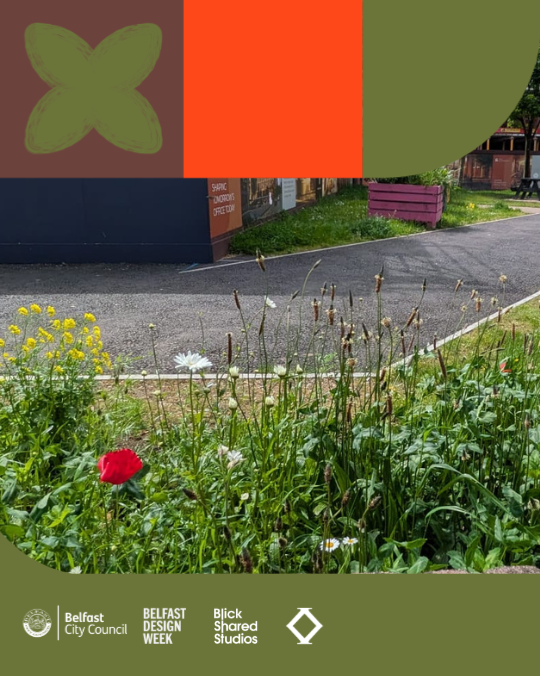
We sowed the seeds, pricked them out, put them into bigger pots, and then planted them in here as individual plants. A lot of people think it’s just a matter of opening a packet of seed, scattering it, and away you go - and then nothing happens!
But it’s not as simple as just throwing out a packet of seed. If you do it at the wrong time of year, you’ll get very mixed results. What happens in the wild is, all these plants go to seed at once. The seeds fall, lie on the ground, get blown about by the wind, knocked around by the rain, and dispersed randomly. Then over winter they get stratification: the frost cracks open the seed shell so water can get in, and they germinate much more easily in spring. That’s how it works.
People think they can open a packet in springtime and scatter the seed, but if it’s been warm and the seeds haven’t had that cold spell, a lot of them just won’t come up. And with the weather at the moment, it’s very rare we get three solid months of really cold weather. That’s one reason a lot of these plants are becoming scarcer: they’re not getting the cold they need. This genetic material has been matching around for millions of years. Things have sped up in recent years, but it’s not enough for them to completely change their makeup to adapt.
Here at Bankmore Square, we’ve got more of an annual bed: plants that flower every year. But then you’ve got things like that white cosmos which can take quite a long time to flower. There’s yarrow here as well and also daisy, pimpernel, different types of thistles and so on in the mix.
Once these plants have grown out, do you collect seeds from them?
Sometimes. I maintain a few meadows for people. Back in the day, hay meadows were very common. People cut the grasses and whatever was in the meadow mix, they let it dry, then raked it up. During that drying period, maybe a couple of weeks, some of the seed would drop and get into the ground as part of the hay.
Another thing people didn’t realise is, when they took the hay off the field, they were taking away everything they’d put into the soil. That left the soil quite impoverished. Wildflowers actually need that kind of poor soil. They don’t like rich, fertilised ground: that just makes lush green grass. That thin, stony, low‑nutrient soil is often better for wildflowers.
Hay meadows have been around for a long time, used for livestock, housing, all sorts. Over time, in nature, there’s a lot of competition for the resources in the soil, so the plants specialise. Yellow rattle is one of the first things we put into a new meadow. Around here you’d also see gorse bushes – the yellow gorse you see up in the hills, flowering in early spring.
The idea with a lot of these sites is to have a big area full of wildflowers. But then certain plants can take over. The main culprits are things like ox-eye daisy or yarrow. Yarrow’s a really good medicinal herb, but it’s quite vigorous.
We also planted wild daffodils. The mistake people make is putting bulbs in neat rows. It’s much better to just flick them into the ground and let them land where they may: that looks more natural.
In the past it was fashionable to create very curated flower and plant beds, but more recently, there has been a trend towards a “wild” or more natural look. Why do you think this is?
It’s become a bit of an educational thing. People are more aware, and it’s become trendy: Instagrammable, a hashtag, more present in people’s minds. There is always the granny with the tidy line of flowers and perfectly kept beds, and that still has its place.
But now the general approach is to let things drop more naturally. A lot of the plants here in Bankmore Square - for example - were already here before we arrived, and we just worked with what was in that wildflower mix. There are different ways to do it. We’ve sown seed here in the past, but I think the best way to get a strong result is to put in semi‑mature plants rather than scattering seed in spring and hoping for the right weather. Otherwise the timing is wasted and they’re always behind.
If you grow them in a greenhouse or polytunnel, harden them off by exposing them gradually to the cold, they become stronger and more resilient. Then, once they go into the ground, they’re off to a flying start.
Walking around the Linen Quarter, it’s clear to see that you’ve so much knowledge about plants. You know their Latin names, exactly which one is called what - how did you gain all of that knowledge?
It’s funny, because when we were doing that first plant identification module in college, plant ID was a big part of the course. We had all the books – the RHS encyclopaedias of all the plants. There are still lots and lots of plant books out there, old and new. Now, people can more or less point their phone at a plant and find out what it is, and that’s fair enough: I do that too! But the thing is, if you know a plant and you’ve learned it through repetition, you learn the common name, then the Latin part becomes easier.
The advantage of being able to pull a plant name off the top of your head is that it gives you a bit of an edge. I probably know 2,000–3,000 plants, but there are millions out there. I’m more proficient with plants for the amenity sector – gardens and outdoor spaces – than, say, fruit plants, trees, roses.
There are so many different avenues in horticulture; you’d never know it all.
What are some of your favourite plants around the Linen Quarter that you’ve planted or seen?
I love yarrow – it comes in a whole lot of varieties. I love this other one, Festuca – a blue grass. Silvery blue. I try to introduce a bit of a colour scheme here; that silvery blue shows up well against the black planters.
I don’t know if I have one favourite plant. Some of them are doing better than others, for different reasons – maybe they’re just suited to the situation, or they’ve been maintained properly, or they’ve been disrespected more in other places compared to others.
All of the Calamagrostis grasses do well everywhere. I love grasses at this time of year, when they get the seed heads on them. They’ve got movement. If I had a garden big enough, I’d have these in the garden. At this time of year, it’s all that movement and sound as well – when the wind blows through these grasses, it’s like the garden has sound too. There’s a whole lot of different grasses. We all know what grass looks like, because people associate them with lawns, but they come in such vast sizes and shapes. Bamboo, for example, is a grass – some can get 30–40 feet tall. The ones in our planters here are a nice metre, metre‑and‑a‑half tall. You walk past them at ground level and you can feel the height and the texture they have. Grasses are a vast family.
A lot of gardeners have their own style. It’s a bit like a musician: certain bands or musicians use certain notes in the way they write their music. Certain gardeners have favourite plants they’re familiar with including what you might call “good doers” – plants that do well in a lot of different scenarios.
But you also have to not only use the ones you’re familiar with – to try to add something more onto your palette each time. Then you learn more, and you might stumble upon a combination of plants you’d never thought about before, and all of a sudden you’ve got another thing to offer, another combination.
How can people be more sensitive to plants within different environments, for example growing locally in Belfast with its particular climate, soil etc.?
Everything’s brown in the winter. We have it for three months of the year, maybe, and these “brown plants” are a food source for insects and all sorts – a habitat. But people unfortunately just see them as a mess and they want them tidied up.
There’s a garden designer called Piet Oudolf who designed a lot of these kinds of spaces that have a very northern, almost Scandinavian feel. He designs a lot of gardens that are very strong on grasses. He uses grasses, a lot of herbaceous perennials, and his whole premise is: “you’ve got to think about winter too.”
Winter is a very valid and very present season that we all have. If we just keep going, “I can’t do this, my garden is completely wasted for three months,” then you’re writing off a big chunk of your life.
Design with winter in mind.
How do you get people to care more about their greenery, about plants?
What you guys are doing here at the moment is a fabulous example!
There are plenty of things for people to do – Belfast has some lovely parks. I’m a big fan of Ormeau Park. I live beside it, walk through it many, many times, and I love being there.
It’s about education. You have to get people early enough. I came to horticulture slightly later than I might have liked – late teens, early 20s. But better late than never. I think it’s probably better to educate folks even younger than that.
I’m working with a school up in North Belfast because we’ve been designing a garden for them on a very limited budget and it’s going to be lovely. You have to get the kids involved in something simple, like a packet of seed. Everybody knows sunflowers – kids love them. They’re big, they can get up close and see the potential. Then further up the line you can introduce the smaller, finer plants with tiny seeds, but you need to hone your skills with something more manageable first before you start giving them the really fine, detailed stuff.
Sunflowers are so popular. I was back in France recently, in Bordeaux, and there were fields of them everywhere – such a big crop. We don’t necessarily have the weather here to grow them on a massive scale, but it’s amazing to see miles and miles of sunflowers.
In gardens, people don’t have spaces big enough for massive rows, but some sunflowers are only a foot tall, with a big flower head. There’s a sunflower size for everybody. And that’s not just sunflowers – there’s a whole lot of different plants that have been “miniaturised” so everybody can have something.
Do you have tips for people that have a really small house, maybe just one room, and no specific planting skills? What could they grow effectively inside? Or small yards and tiny outdoor spaces?
Inside the house… that’s a whole other thing. I’ve had a few successful windowsills with herbs and so on. The thing is, a lot of people compost a plant, maybe in the wrong soil, then see, “Oh, that’s really dry,” because it feels dry at the top 2–3 cm, and think it needs a whole lot of water.
You can kill plants with kindness. It’s easier to kill a plant by overwatering it than by letting it get dry. People make that mistake oftentimes. They feel the top layer, think it’s too dry, and put a whole load of water on, or a load of plant food – it’s just too rich for the plant. A lot of plants, like wildflower meadow things, don’t need really rich compost, and houseplants are the same.
In terms of small yards, I know small yards very well. We’ve lived in houses all around Belfast with tiny yards. Oftentimes they’re facing north, for example. These building backyards in Belfast are really, really dark, but you’ll always find something that’s going to grow.
You can use ivy – Hedera – that’s always a good one. Whenever you have a situation like that, you have to realise you can use the vertical aspect of the wall as well. Ivy comes in lots of varieties.
You can use the walls as support. Clematis – honeysuckle, some hydrangeas will do really well on north‑facing walls and in shady areas.
Discover more about the Linen Quarter BID here and find us at Bankmore Square on Friday 18th September, 4pm onwards at Culture Night Belfast 2026!
